Care
How to seal limewash
Don’t.
That is the honest answer and it is not a slogan. Limewash is not an unfinished surface waiting for a protective coat — it is a finished mineral surface that goes on hardening by itself for years. A sealer stops that, and takes two other things with it on the way out.
We sell limewash. We do not make a sealer, we would rather you did not buy anybody else’s, and the rest of this page is why.
What a topcoat actually does to limewash
Three mechanisms. All three are losses, and the third is the one people notice first and regret most.
1. It stops the wall getting harder
Limewash does not dry so much as set. It cures by carbonation: the lime reabsorbs carbon dioxide out of the air and converts back into calcium carbonate — limestone — inside the surface. That reaction is still going on months and years after you put the brush down, and it is what makes an old limewashed wall genuinely hard.
Carbonation needs gas exchange. A sealer is a film, and a film blocks it. You have taken a surface that was going to keep strengthening and frozen it at week one.
2. It removes the breathability you chose lime for
The reason to put lime on a wall instead of paint is that lime is vapour-open. Moisture moves through it rather than collecting behind it, and trapped moisture is the precondition for mould and for coating failure.
Seal limewash and the wall is vapour-closed again. You have reintroduced the exact problem you spent money to avoid, and you have done it with a thinner, cheaper film than a proper paint would have given you.
3. It flattens the look — and this is the one people see
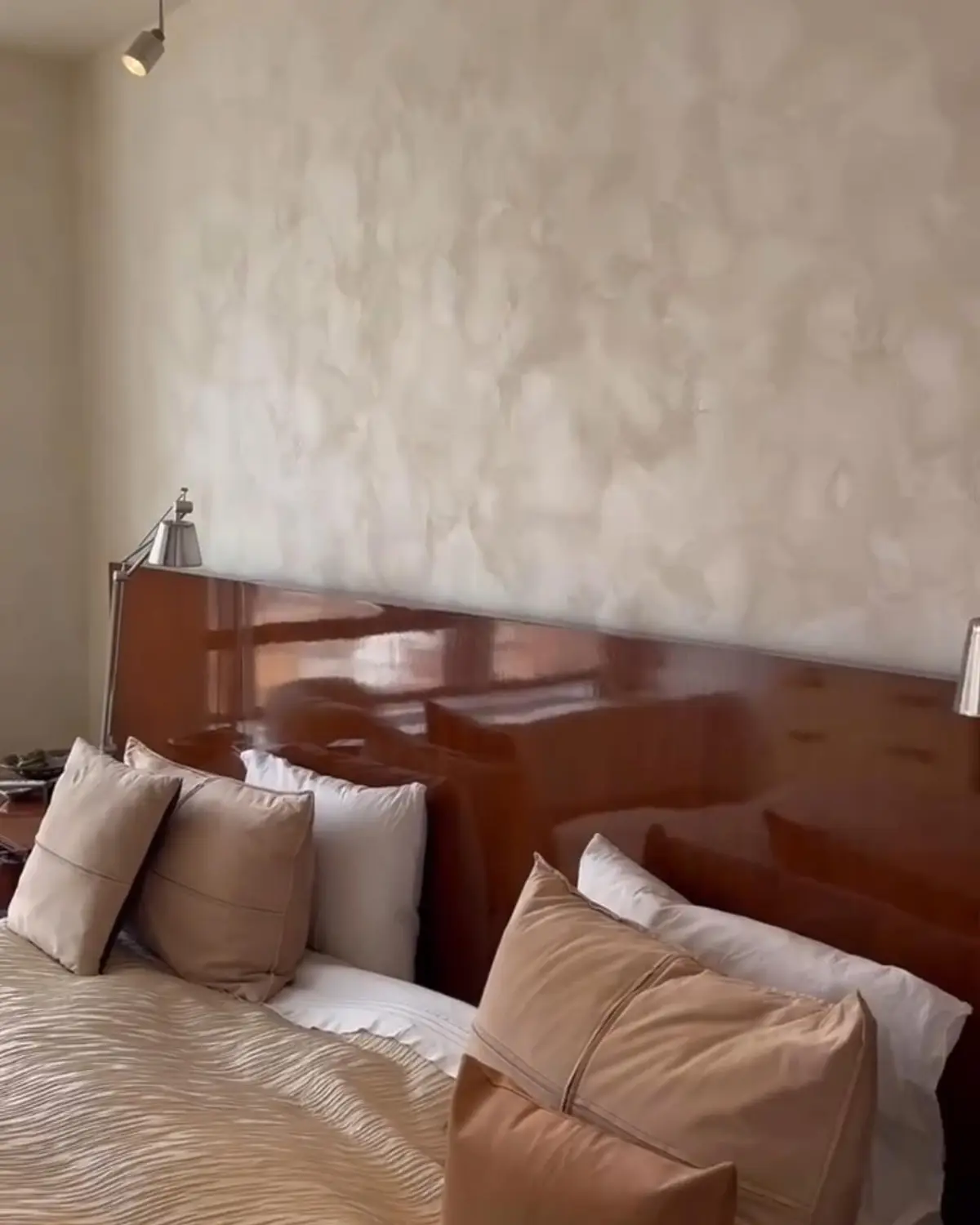
The cloudy, shifting depth in a limewashed wall is an optical effect. Light enters a porous mineral layer, scatters around inside it, and comes back out diffused. That scattering is why the wall seems to change through the day and why it reads as lime rather than as colour.
A sealer fills the pores with resin. The scattering stops. The wall goes darker, flatter, and faintly plasticky — and it is permanent.
Sealed limewash looks like mediocre paint. People arrive at this page having just done it to a whole room, which is why it is written plainly.
So why does everyone sell limewash sealer?
Because people search for it.
Most products marketed as limewash sealers are acrylic or polyurethane topcoats — a plastic film sold to go over a breathable mineral finish, which is a contradiction in terms. They are not fraudulent; they do seal things. They are just the wrong answer to this question, and the companies selling them know what limewash is.
If what you actually want is a hard, wipeable, sealed wall, that is a legitimate thing to want and the right product for it is a good waterborne enamel. Several come in very low VOC content. Buy one of those and skip limewash entirely — you will be happier and it will cost you less.
The real exception: tadelakt, and what it is sealed with
There is one lime finish that genuinely is sealed, and understanding how is the most useful thing on this page.
Tadelakt is lime plaster burnished with a stone and then worked over with olive-oil soap. The soap reacts with free lime in the surface to form calcium stearate — a water-repellent mineral compound that forms inside the plaster.
That is a chemical reaction with the wall, not a film laid on top of it. Which is why tadelakt is waterproof enough for a shower and still breathes. No acrylic topcoat does this, and no amount of sealer applied to limewash turns it into tadelakt.
Which means, practically
If the surface will take direct, repeated water — a shower surround, a wet room, a steam room — you do not want sealed limewash. You want tadelakt, which is a different material and a different job.
An ordinary bathroom with a working extractor fan is fine for limewash, unsealed. Humidity is not the problem; standing water is.
If your limewash is dusting or rubbing off
This is the real reason most people start looking for a sealer, and a sealer is the wrong fix for it.
Limewash that chalks heavily, dusts or wipes away has a bonding problem, not a protection problem. It was applied over paint, or over drywall that was not adequately primed, and it never keyed into anything. A topcoat does not solve that — it glues the loose material down for a while and then fails along with it, and now you cannot reapply over the top either.
The real fix is the substrate: back to a porous surface, mineral primer or a skim coat, then reapply. Properly bonded limewash on masonry, brick, stucco or lime plaster does not need protecting from anything.
Light chalking in the first few weeks of a fresh coat is normal and different. Brush it off. It stops.
What about wax?
Wax on limewash is a decorative decision, not protection, and it is worth being clear about which one you are making.
A lime-compatible wax or beeswax will deepen the colour, add a slight sheen, and move the wall some distance toward the character of polished plaster. Some people want exactly that, particularly on a small feature wall or an alcove.
What you are trading away is the matte mineral depth, and you are reducing breathability wherever you apply it. So: a feature area, by deliberate choice, indoors. Not a whole house, and never an exterior.
And if you have already sealed it
We would rather be straight with you. Getting a cured topcoat back off a thin, porous mineral layer generally takes the limewash with it, because the sealer has soaked into the finish rather than sitting cleanly on top of it.
The realistic repair is to abrade or strip back and reapply the limewash, then leave it alone. If you can live with the flatter look, that is also a perfectly reasonable answer — it is a cosmetic loss, not a structural one.
Common questions
Do you need to seal limewash?
No. On interior walls and ceilings, exterior masonry, brick and stucco, limewash needs no sealer and is better without one. It is not an unfinished surface waiting for a topcoat — it is a finished mineral surface that continues to harden on its own for years. Sealing it stops that.
What happens if you seal limewash?
Three things, and all of them are losses. The sealer blocks carbonation, which is the process that hardens the lime, so the wall stops getting stronger. It makes the wall vapour-closed, which removes the breathability that is the main reason to choose lime. And it fills the pores that were scattering light, so the cloudy depth flattens out and the wall goes darker and slightly plasticky. Sealed limewash looks like mediocre paint.
Why do people sell limewash sealer then?
Because people search for it. Most products marketed as limewash sealers are acrylic or polyurethane topcoats, which is a contradiction in terms — a plastic film over a breathable mineral finish. We sell limewash for a living and we would rather you did not buy one of these, including from us. We do not make one.
How do I make limewash more durable without sealing it?
Apply it properly in the first place, which mostly means onto a surface it can key into. Limewash on bare masonry, brick, stucco or lime plaster hardens for years and is genuinely durable. Limewash that dusts or rubs off was almost always applied over paint or over an inadequately primed surface, and no topcoat fixes a bonding failure — it just glues the loose material down temporarily.
Can you seal limewash in a bathroom?
An ordinary bathroom with a working extractor fan does not need it. Lime is naturally alkaline and vapour-open, which is an advantage in a humid room rather than a problem. What limewash cannot take is direct, repeated water contact — a shower surround or a wet room. That is tadelakt, which is a different lime system entirely and genuinely waterproof. Do not try to turn limewash into tadelakt with a sealer; it does not work that way.
What is tadelakt sealed with, if not a topcoat?
Olive-oil soap, and the distinction matters. The soap is worked into burnished lime plaster, where it reacts with the free lime to form calcium stearate — a water-repellent mineral compound formed inside the surface. It is a chemical reaction with the wall, not a film laid over it, which is why tadelakt is waterproof and still breathes. No acrylic topcoat does that.
Does limewash need sealing outside?
No, and outside is where sealing does the most damage. Masonry absorbs water and releases it, and a sealed face traps moisture that got in from behind — a roof leak, rising damp, vapour from inside the house. It collects and pushes the coating off, taking substrate with it. Limewash weathers and erodes very slowly instead of failing, and refreshing it is one coat straight over the old one with no preparation.
Can I use wax on limewash?
You can, and it is a deliberate decorative choice rather than protection. A lime-compatible or beeswax finish on limewash will deepen the colour, add slight sheen and change the character of the wall — that is a look some people want, particularly on a small feature area. Understand that you are trading the matte mineral depth for something closer to polished plaster, and that you are reducing breathability wherever you put it. Not on a whole house, and not on exterior walls.
I already sealed my limewash. Can I undo it?
Not easily, and we would rather be straight with you about that. Removing a cured topcoat from a soft, porous mineral layer generally means taking the limewash off too, because the finish is thin and the sealer has gone into it. The realistic repair is to abrade or strip back and reapply the limewash, then leave it alone. If you can live with the flatter look, living with it is a reasonable choice.
How long does limewash take to fully harden?
It is touchable within hours and keeps hardening for months to years. Carbonation works from the surface inward as carbon dioxide reaches the lime, so the wall is still getting measurably harder a year after you applied it. Expect some light chalking in the first few weeks on a fresh coat — brush it off, do not seal it, and it stops.
Nothing to buy here
That is genuinely the recommendation. Apply it onto something it can key into, brush it properly, and then leave the wall alone for the rest of its life.
If you still need the limewash itself: $50 a gallon, $225 for the five-gallon pail — $45 a gallon — tinted by hand, shipped anywhere in the United States, with the full application course included. No sealer in the cart, because we do not sell one.
Who we are
Thirty seconds, then stay for the podcast.
I’m Ben Lynch. I started LimeWash Pros after reading what the EPA had published about the air inside ordinary American houses — and realizing the walls were the problem.

Meet LimeWash Pros
Who we are, what lime does that paint cannot, and why the air inside your house is the reason we do this.
The podcast
 11:33
From Setback to Limewash Success: Meet Ben Lynch
Why I walked away from conventional paint, what I found in the research on VOCs, and how that turned into LimeWash Pros.
 12:10
How Modern Paint is Killing You
The VOCs in ordinary latex paint don’t stop off-gassing when the wall dries. What that does to the air in your house.
 9:43
The Carcinogen On Your Walls
Benzene is a known human carcinogen and it is in the paint on every surface of your home. What the research says.