Care
How to clean limewash
A dry cloth handles most of it. A barely damp one handles nearly all the rest. What ruins a limewashed wall is almost never the mark — it is what somebody reaches for to remove it.
Vinegar dissolves lime. A magic eraser sands it off. Both are the standard internet advice for cleaning walls, and both will turn a small mark into a permanent one.
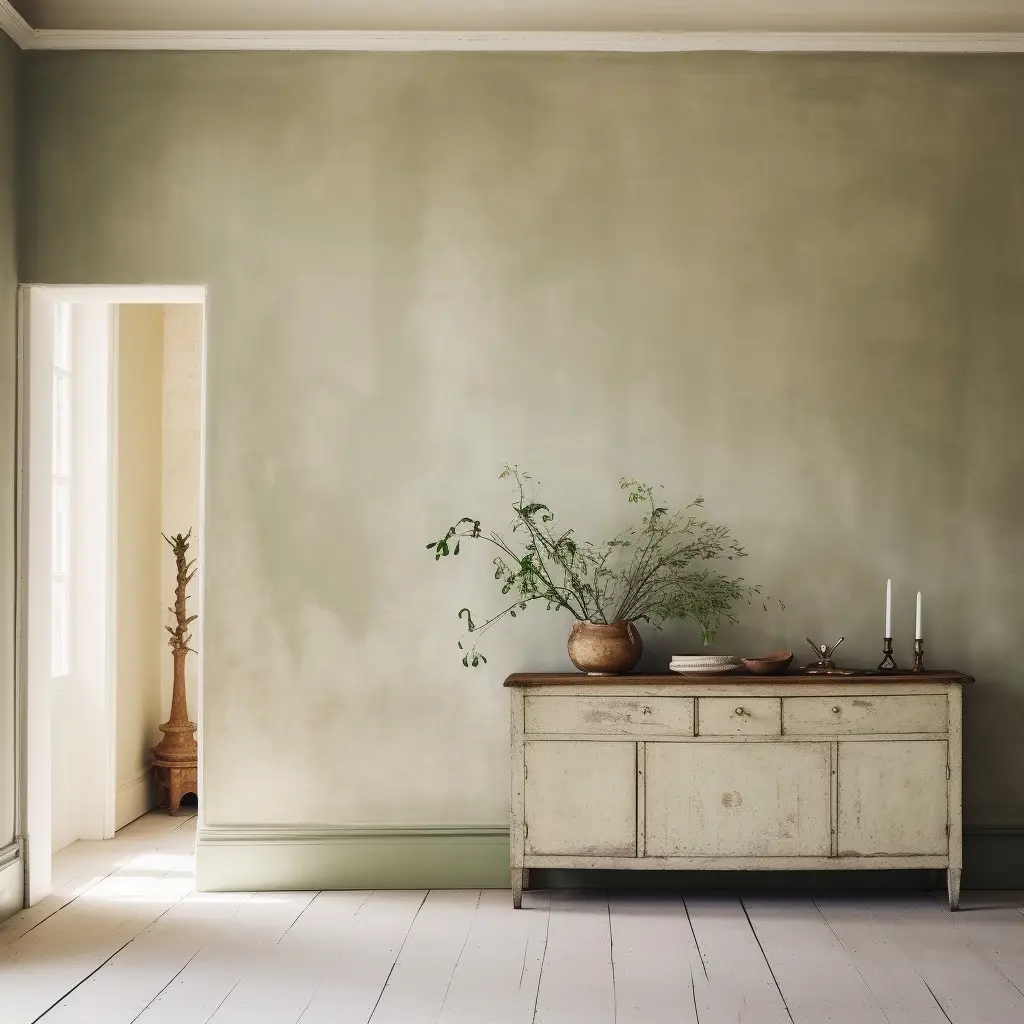
The method, in order
Work down this list and stop as soon as it works. Ninety percent of problems end at step two.
1. Dry first, always
A dry microfibre cloth, a soft brush attachment on the vacuum, or for a scuff, a clean artist’s eraser. A great many marks are transferred material sitting on the surface — a chair back, a bag, a shoe — rather than damage to the finish, and they lift dry with no risk at all.
2. Then plain water, barely damp
A soft cloth, wrung out until it is damp rather than wet. Blot, do not scrub. Work from the outside of the mark inwards so you are not spreading it, and stop before the surface starts to look shiny — shine means you are burnishing the lime, which is its own kind of damage.
Let it dry fully before deciding whether it worked. A damp patch reads much darker than the same patch dry.
3. A trace of pH-neutral soap, if you must
For something greasy, a very dilute pH-neutral soap — a plain dish soap with nothing citrus in it, a few drops in a bowl of water. Damp cloth, blot, then a second cloth with clean water to lift the soap back off. This is already further than most walls ever need to go.
4. Touch it in, and stop fighting
If two attempts have not shifted it, more attempts will make it worse, not better. Touch the area in with limewash instead. It takes about ten minutes and it is genuinely invisible afterwards, because each coat is translucent and blends into the last rather than sitting on top of it.
Keep the remainder of your gallon. This is why.
What never to use
- Vinegar or lemon juice. Acetic and citric acid. Limewash is calcium carbonate. The acid dissolves the finish and leaves a pale etched patch more visible than whatever you were removing.
- Magic erasers and melamine sponges. A very fine abrasive. It thins and burnishes a translucent mineral finish, leaving a shiny patch of a different colour that cannot be buffed back out.
- Bleach. It will not clean lime and it can bleach the mineral pigment, giving you a permanently paler area.
- General household sprays. Most bathroom and kitchen cleaners are acidic by design — that is how they cut limescale, which is chemically the same material as your wall.
- Scrubbing, of any kind. Pressure removes limewash. Blotting removes marks.
- Sealer, wax or varnish. Closes the surface, ends the breathability, stops the lime hardening further, and kills the way it catches light. See below.
What actually stains, and what to do about it
| What happened | Comes out? | Do this |
|---|---|---|
| Dust, cobwebs | Yes | Dry cloth or soft vacuum brush |
| Scuff from furniture or a shoe | Usually | Dry cloth first, then artist’s eraser |
| Fingerprints, handprints | Usually | Barely damp cloth, blot |
| Pencil, crayon | Often | Eraser dry; touch in if it resists |
| Coffee, wine, juice | Rarely | Blot immediately, then touch in |
| Grease and cooking oil | No | Touch in — oil penetrates a porous finish |
| Ink, marker | No | Touch in |
| Rust from a fixing | No — it keeps bleeding | Deal with the metal first, then touch in |
| Damp patch from a leak | Fixes itself | Find the leak. Lime dries out and recovers |
The pattern is worth noticing: nothing on this list is solved by a stronger cleaner. A porous mineral finish either releases something or it does not, and the answer to “it does not” is always ten minutes with a brush rather than an hour with a chemical.
How to touch up limewash
Use the same material, thinned
The remainder of your original gallon, thinned with clean water to roughly the consistency of thin cream. If you have used ours, the sealed can of extra pigment we ship with every order is there to adjust the colour if the wall has settled lighter or darker than the leftover material.
Feather it, do not fill it
Work outwards from the mark with a dry-ish brush in the same random cross-hatched motion the wall was applied with. Do not paint a shape. The goal is for the new material to get thinner and thinner until it disappears into the surrounding wall.
Then wait
It will look obvious for a day or two and then stop being visible as it carbonates and settles into the rest of the surface. This is the thing limewash does that paint cannot — there is no repair edge, because there is no film with an edge.
Never seal it
People ask about this constantly, usually in a kitchen or a hallway, and the answer is worth being blunt about.
Sealing limewash closes the surface. That ends the breathability — the entire technical argument for using lime on a wall. It stops the carbonation that makes the finish get harder every year. And it flattens the way the surface refracts light, which is the whole aesthetic reason anybody chooses it.
What you are left with is a matte plastic wall that cost considerably more effort than paint would have.
If a surface genuinely has to be wiped down constantly
Then limewash was the wrong system for it, and the answer is a different lime finish rather than a coating over this one. Tadelakt is a burnished lime plaster sealed with olive soap — genuinely waterproof, wipeable, and used in Moroccan hammams for centuries. It is the correct material for a shower surround, a splashback, or a wall that takes daily punishment.
Venetian plaster is the other option where a harder, polished, more durable lime surface is wanted.
Exterior walls
Rinse with a garden hose. That is the whole maintenance routine.
A pressure washer on a gentle wide fan is acceptable on a cured exterior, but never on a finish less than a week old — in that window it will take the limewash off, which is useful when you want it off and a catastrophe when you do not.
When an elevation eventually looks thin and tired, usually somewhere between year five and year seven and usually the south or west face first, you brush another coat straight over the top. No stripping, no sanding, no primer.
Frequently asked
How do you clean a limewashed wall?
For dust, a dry microfibre cloth or a soft brush attachment on a vacuum. For a mark, a cloth barely damp with plain water, blotted rather than scrubbed, working from the outside of the mark inwards. That handles the overwhelming majority of what happens to a wall. What you do not do is reach for a household cleaner — most of them are acidic, and acid dissolves lime.
Can you use vinegar on limewash?
No, and this is the most damaging piece of advice circulating. Vinegar is acetic acid and limewash is calcium carbonate — the acid dissolves the finish. It will take the mark off and a layer of your wall with it, leaving a pale etched patch that is more visible than the original problem. The same applies to lemon juice and to most bathroom and kitchen sprays.
Can you use a magic eraser on limewash?
No. A melamine sponge is a very fine abrasive — it works by sanding the surface off. On a painted wall that removes the top of a film you cannot see into. On limewash it burnishes and thins a translucent mineral finish, leaving a shiny patch of a slightly different colour. It is the second most common way people make a small mark into a permanent one.
Does limewash rub off on clothes?
Properly applied and cured, no. Chalking happens when limewash was put over a non-porous surface with no key — painted drywall with no mineral primer being the usual culprit — so the lime never bonded and is sitting as loose dust. If an existing wall is marking clothes, that is a bonding failure underneath, not the nature of the material, and no amount of cleaning will fix it. The fix is preparation and reapplication.
How do you get scuff marks off limewash?
Start with a dry soft cloth or an artist’s eraser — a lot of scuffs are transferred material sitting on the surface rather than damage to the wall, and they lift dry. If that fails, a barely damp cloth blotted gently. If it still shows, the honest answer is to touch in with limewash rather than keep working at it, which is why we ship a sealed can of extra pigment and why we tell clients to keep the remainder of their gallon.
Can limewash be touched up?
Yes, and far better than paint can. Each coat is translucent and blends into the last rather than sitting on top of it, so a touched-in patch softens into the surrounding wall within days as it carbonates. There is no visible repair edge the way there is with a paint patch. Feather it out with a dry brush rather than filling in a shape, and keep it thin.
What stains limewash permanently?
Oil and grease are the real problem — they soak into a porous mineral finish and cannot be washed out. So is anything strongly coloured and liquid given time to penetrate: red wine, coffee, turmeric, ink. Rust from a metal fixing bleeds through and keeps coming back. In all of these cases the answer is not a stronger cleaner, it is to re-coat that area once it is dry, which takes about ten minutes.
Should you seal limewash to make it easier to clean?
No. A sealer closes the surface, which ends the breathability that is the entire technical argument for the material, stops it carbonating and hardening further, and flattens the light-catching quality that is the aesthetic argument. You would be left with a matte plastic wall that took considerably more work to produce than paint would have. If a surface genuinely needs to be wiped down constantly, the right answer is a different lime system — tadelakt — not a sealer over limewash.
Can you clean limewash in a kitchen or bathroom?
Yes, with the same method — barely damp cloth, plain water, blot rather than scrub. Lime is naturally alkaline and mildly antimicrobial, which is why dairies and cellars were limewashed for centuries, so it handles a damp room well. Grease splatter behind a hob is the one place that will eventually need touching in rather than cleaning, because oil penetrates.
How do you clean exterior limewash?
Rinse it with a garden hose. That is genuinely all. Do not use a pressure washer on a setting strong enough to erode the surface, and never on a finish less than a week old — in that window a pressure washer will take it off, which is useful if you want it off and a disaster if you do not. Dirt and pollution weather off lime on their own far better than they do off paint.
If the wall was never right to begin with
A limewashed wall that chalks onto clothes, dusts when touched or lifts in sheets does not have a cleaning problem. It has a bonding problem underneath — lime applied over a sealed surface with nothing to key into. No product and no technique will fix that from the top.
We see it often enough to have written it up. If that is your wall, send us a photo and we will tell you honestly what it needs, whether or not that ends up being us.
Who we are
Thirty seconds, then stay for the podcast.
I’m Ben Lynch. I started LimeWash Pros after reading what the EPA had published about the air inside ordinary American houses — and realizing the walls were the problem.

Meet LimeWash Pros
Who we are, what lime does that paint cannot, and why the air inside your house is the reason we do this.
The podcast
 11:33
11:33From Setback to Limewash Success: Meet Ben Lynch
Why I walked away from conventional paint, what I found in the research on VOCs, and how that turned into LimeWash Pros.
 12:10
12:10How Modern Paint is Killing You
The VOCs in ordinary latex paint don’t stop off-gassing when the wall dries. What that does to the air in your house.
 9:43
9:43The Carcinogen On Your Walls
Benzene is a known human carcinogen and it is in the paint on every surface of your home. What the research says.