Substrate
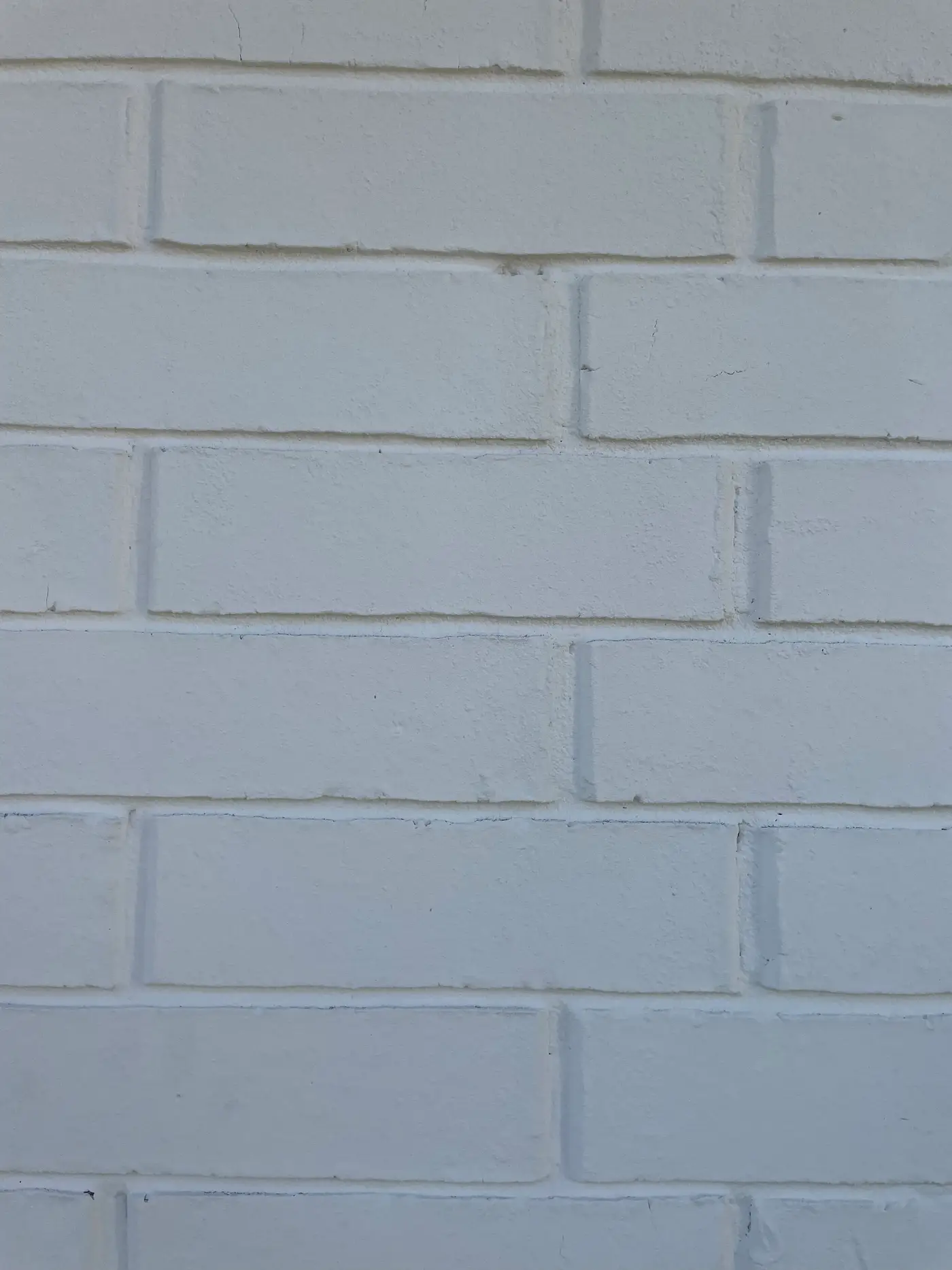
Limewash on brick
Every other surface is a compromise. Brick is what limewash was invented for. It is porous, mineral and alkaline — the three things lime needs — so there is no primer, no bonding agent and no skim coat. You wet the wall and brush it on.
We apply lime finishes for a living, in Dallas and Fort Worth, Austin and Palm Beach. This is what actually happens on brick, including the parts that would cost a manufacturer a sale.
Why brick and lime belong together
Limewash does not form a film. It soaks into the face of the brick, then reacts with carbon dioxide in the air and turns back into limestone — inside the masonry, not on top of it. The finished wall is not a brick wall with a coating. It is a brick wall whose surface is now partly lime.
That mechanism needs a porous, mineral surface to get into. Brick is the textbook case. So is stone, and so is mortar. It is the reason limewashed buildings in Italy, Spain and Morocco are still holding a finish applied generations ago, refreshed occasionally, never stripped.
The moisture argument, which should decide it on its own
Brick is built to get wet and dry out again. Acrylic masonry paint seals the face, so water that finds its way behind the film — driving rain, rising damp, vapour pushing out from inside the house — has nowhere to go. It lifts the paint off in sheets, and in a freeze it spalls the face off the brick underneath.
Limewash is vapour-open. The moisture passes straight through it. This is not a marketing distinction; it is the difference between a wall you repaint every eight years and one you leave alone.
How to limewash brick
1. Clean the brick — properly
Wash off dirt, cobwebs, efflorescence and any loose mortar. A pressure washer on a wide fan is fine on sound brick; on old or soft brick use a stiff brush and water instead.
On a fireplace, degrease first. Soot is oily, and lime will not key through it.
2. Do not seal it
This is the one instruction people get backwards. A masonry sealer closes the pores the lime needs, and the limewash will sit on top and dust off. No sealer, no bonding primer, no “brick conditioner”. Bare, clean brick.
3. Dampen the wall before you start
Mist the section you are about to work with a garden sprayer until it is damp but not running. Dry brick pulls the water out of the limewash instantly, which stops the lime penetrating and leaves it chalky.
In a Texas summer you will re-wet as you go. Work in the shade, or early.
4. Brush it on thin, in a random pattern
Use a masonry or block brush, not a roller. Cross-hatch rather than laying straight lines — limewash shows the path of the brush, and a regular pattern reads as a mistake while a random one reads as depth.
Thin is the whole trick. Two thin coats look vastly better than one heavy one, and a heavy coat is the usual reason a finish comes out looking like flat white paint.
5. Decide the look while it is still wet
For a distressed, aged look, go back over sections with a damp sponge or a hose after ten to thirty minutes and pull some of it back off, letting more brick show. For solid coverage, leave it and add a second coat once the first is dry.
You have roughly five days before the lime has carbonated far enough to be permanent. A pressure washer will take most of it off before then. After that, it stays.
6. Second coat, then leave it alone
Let the first coat dry fully — it will look far lighter dry than wet, which catches everybody out the first time. Judge the colour dry, never wet. Then apply the second coat the same way.
It keeps hardening for months afterwards. It is meant to.
Limewash on painted brick
The short answer: not directly.
Cured paint is a sealed plastic skin with no pores. Lime applied straight onto it has nothing to key into, so it dries, looks acceptable for a few days, and then dusts or wipes off. It happens with every genuine limewash on the market, ours included, because it is how lime works rather than a product fault.
Two honest routes:
Strip it back to bare brick
The better result and the longer-lasting one, and the only option if the existing paint is already peeling — new finish over failing paint fails with it. Chemical strippers made for masonry, or soda blasting on a sound wall.
Or prime with a mineral primer
A mineral or silicate primer of the kind sold for lime systems, not a glossy acrylic sealer. Its job is to leave a uniformly absorbent surface. This works, and it is much less labour, but you have accepted that a sealed film stays under your breathable finish.
Limewash vs German smear vs painted brick
All three are asked about together and they are not variations on a theme. They are three different materials doing three different things.
| Limewash | German smear | Masonry paint | |
|---|---|---|---|
| What it is | Slaked lime and water, brushed on thin | Wet mortar troweled on and wiped back | Acrylic film on the surface |
| Brick still reads | Yes — texture and joints show through | Partly — some bricks buried entirely | No — colour and texture flattened |
| Breathable | Yes | Yes | No |
| Reversible | About five days, then permanent | No — it is masonry work | Only by stripping or blasting |
| How it ages | Thins and softens; recoat straight over | Stays as applied | Blisters and peels; must be stripped |
| Refresh | Brush on another coat | Not really refreshable | Strip, prime, repaint |
Up close they look nothing alike. If what you want is the brick softened but still legible as brick, that is limewash. If you want a heavy, mortar-buried, old-European look, that is German smear — and it is permanent.
Brick fireplaces
The most common interior use, and the easiest place to start if you have never done this.
Lime is non-combustible, so around a firebox it is a safer finish than any paint. It shrugs off the heat a surround sees. The only real preparation beyond a normal brick wall is degreasing the soot, which is oily and will stop the lime keying.
Two thin coats. A fireplace is looked at from four feet away in raking light from the fire itself, which is the condition that punishes a heavy coat most.
How much limewash a brick wall takes
Far more than drywall, and this is where budgets go wrong. Brick drinks.
| Surface | First coat | Second coat |
|---|---|---|
| Bare exterior brick | 100–150 sq ft per gallon | 175–250 sq ft per gallon |
| Interior brick or fireplace | 150–200 sq ft per gallon | 250–300 sq ft per gallon |
| Smooth primed drywall | 250–300 sq ft per gallon | 300–400 sq ft per gallon |
A single-storey brick ranch is usually 1,800 to 2,500 square feet of wall. Budget three to five gallons per coat, two coats. The five-gallon pail works out at $45 a gallon, which is where almost every exterior job lands.
Colour on brick
Brick is not a white canvas, and limewash is translucent. Whatever colour the brick is now, it is part of the result — a warm red brick under a white limewash gives a soft pink-cream, not white. That is usually the reason the finish looks so good, but it means the swatch is only half the story.
We tint by hand to twelve standard colours or to anything you send us — a paint code, a photo, a piece of stone. Custom matching is $30.
Every order ships with a sealed can of extra pigment, already diluted, and the physical swatch we matched against with a brush-out of your own limewash across half of it. Limewash dries considerably lighter than it looks wet, and on a big sunlit exterior wall that gap is at its widest. If the wall comes out lighter than you wanted, you can fix it yourself.
Frequently asked
Can you limewash brick?
Brick is the substrate limewash was invented for. It is porous, mineral and alkaline, which is exactly what lime needs — the limewash soaks into the face of the brick and carbonates inside it rather than sitting on top as a film. No primer, no bonding agent, no skim coat. Wet the brick, brush the limewash on, and it becomes part of the masonry.
Do you need to seal brick before limewashing?
No — and sealing it is the one thing that will ruin the job. A sealer closes the pores that the lime needs to key into and stops the wall breathing. The only preparation genuinely required is cleaning off dirt, efflorescence and loose mortar, then dampening the surface so the brick does not pull the water out of the limewash before it can penetrate.
Can you limewash painted brick?
Not directly, and this is the single most common failure. Painted brick is a sealed film with nothing for the lime to grip, so the limewash dusts off once cured. You have two honest options: strip the paint back to bare brick, or apply a mineral primer made for lime and silicate systems. Stripping gives the better and longer-lasting result. If the existing paint is already peeling, stripping is not optional.
How long does limewash last on brick?
Decades, and it fails gracefully. Lime keeps absorbing carbon dioxide and hardening for years after it goes on, so a limewashed brick wall gets tougher with age instead of weaker. When it does weather it thins and softens in patches rather than blistering and peeling, which means a refresh coat goes straight over the top with no stripping or scraping. Painted brick, by contrast, has to be blasted off before it can be redone.
What is the difference between limewash and German smear on brick?
Limewash is a thin mineral wash that soaks in and lets the brick texture and mortar joints read through — the colour is softened, not hidden. German smear is wet mortar troweled over the brick and partially wiped back, leaving thick irregular deposits that bury some bricks entirely. Limewash is reversible in the early days and reapplied easily; German smear is permanent masonry work. They look nothing alike up close.
Can limewash be removed from brick?
Within roughly the first five days, yes — a pressure washer will take most of it back off while the lime is still curing. After that it has carbonated into the brick and is effectively permanent, though it can be gone over with a heavier coat or a different colour at any time. This is genuinely useful: apply a test section, live with it for a day, and you still have the option to change your mind.
How much limewash do I need for a brick house?
Brick drinks far more than drywall does. Plan on roughly 100 to 150 square feet per gallon on bare brick for the first coat, against 300 or more on a smooth interior wall. A typical single-storey brick ranch runs 1,800 to 2,500 square feet of wall, so budget three to five gallons per coat and expect two coats. Send us the measurements and we will work it out rather than guess.
Can you limewash a brick fireplace?
Yes, and it is the most common interior use. Lime is non-combustible and unbothered by the heat of a firebox surround, so it is a safer finish there than any paint. Clean off soot with a degreaser first, because soot is oily and lime will not key through it. Two thin coats read far better on a fireplace than one heavy one.
Does limewash trap moisture in brick?
The opposite, and this is the argument that should decide it. Brick is designed to absorb and release water. Acrylic masonry paint seals the face, so water that gets behind the film — driving rain, rising damp, vapour from inside — cannot get out, and it pushes the paint off in sheets while it spalls the brick beneath. Limewash is vapour-open. Moisture passes straight through it, which is why limewashed masonry in Europe is still standing after centuries.
Either way, we can help
We apply lime finishes across Dallas and Fort Worth, Austin and Central Texas, and Palm Beach. And we ship The White House Blend™ — the same material we put on client walls, made by hand in our own shop — free anywhere in the United States.
Who we are
Thirty seconds, then stay for the podcast.
I’m Ben Lynch. I started LimeWash Pros after reading what the EPA had published about the air inside ordinary American houses — and realizing the walls were the problem.

Meet LimeWash Pros
Who we are, what lime does that paint cannot, and why the air inside your house is the reason we do this.
The podcast
 11:33
11:33From Setback to Limewash Success: Meet Ben Lynch
Why I walked away from conventional paint, what I found in the research on VOCs, and how that turned into LimeWash Pros.
 12:10
12:10How Modern Paint is Killing You
The VOCs in ordinary latex paint don’t stop off-gassing when the wall dries. What that does to the air in your house.
 9:43
9:43The Carcinogen On Your Walls
Benzene is a known human carcinogen and it is in the paint on every surface of your home. What the research says.